
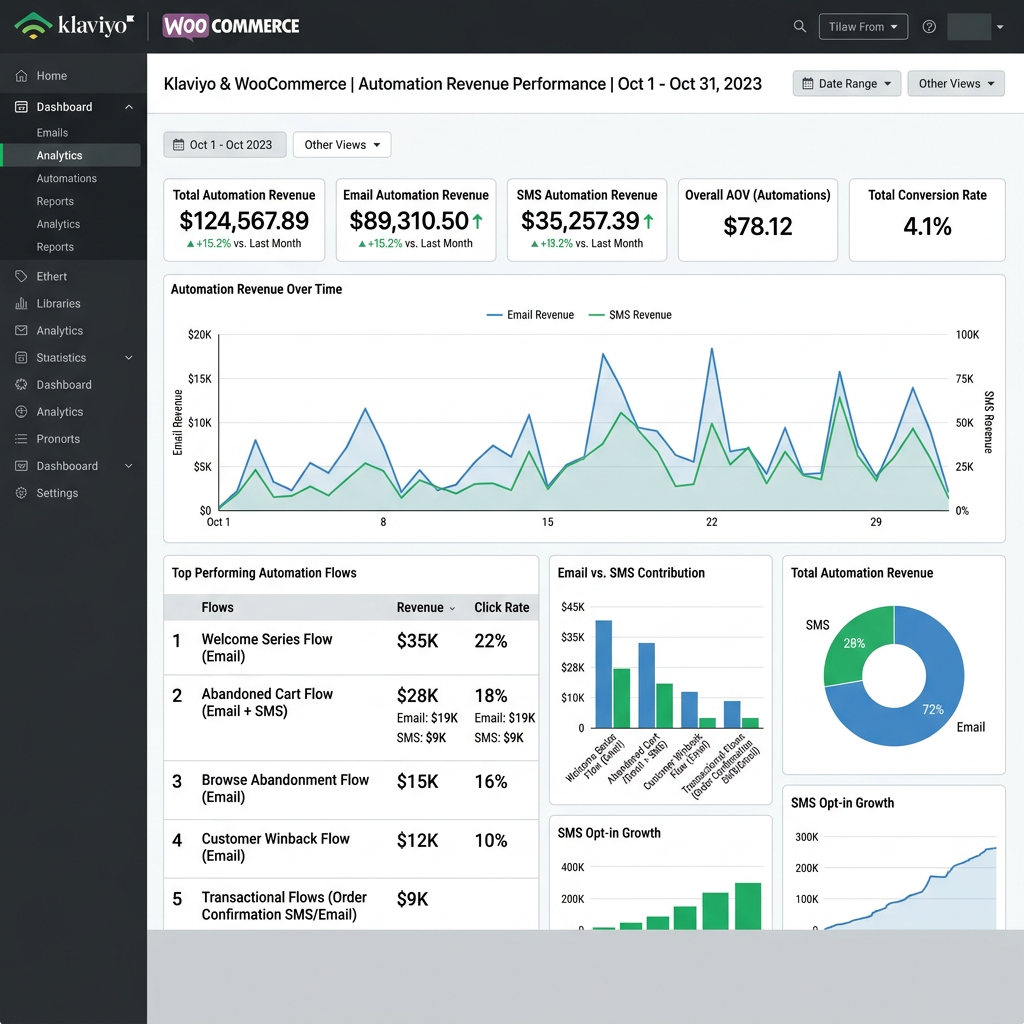
Most WooCommerce stores have an email list. Far fewer are actually using it well. There’s a big difference between having Klaviyo installed and having Klaviyo working — and the gap between those two things is where a significant amount of revenue gets left on the table every month.
Why Klaviyo Specifically
Klaviyo isn’t a general-purpose email platform that happens to integrate with WooCommerce. It was built for e-commerce from the ground up. When connected properly to WooCommerce, Klaviyo knows what every customer has purchased, what they’ve browsed without buying, how much they’ve spent in total, when they last placed an order, and what they’re likely to buy next. That data is what makes behavioral automation possible.
The Flows That Drive Revenue
Abandoned Cart Flow
The highest-ROI automation for most stores. When someone adds items to their cart and leaves without purchasing, Klaviyo triggers a sequence — a reminder within an hour, a follow-up at 24 hours, and a final message at 72 hours. Industry benchmarks put abandoned cart recovery rates at 5–15% of those who receive the sequence.
Browse Abandonment Flow
A step earlier in the funnel — when someone views a product but doesn’t add it to cart. A well-timed browse abandonment email that surfaces the product they viewed and includes related recommendations converts a meaningful percentage of window shoppers into buyers.
Welcome Series
The moment someone joins your list is when their engagement is highest. A welcome series — three to five emails over the first week or two — introduces your brand, highlights your best products, and often includes a first-purchase incentive. Done well, it drives first-purchase conversion rates significantly higher than cold lists.
Post-Purchase Flow
The purchase isn’t the end of the customer relationship — it’s the beginning of retention. A post-purchase sequence thanks the customer, sets delivery expectations, requests a review at the right moment, and introduces complementary products when the timing makes sense.
Win-Back Flow
Every store has customers who bought once and went quiet. A win-back sequence targets customers who haven’t purchased in a defined period with messaging designed to re-engage them. Win-back flows consistently deliver ROI on what would otherwise be a dead segment of your list.
Segmentation: Sending the Right Message to the Right People
Instead of sending every campaign to your entire list, Klaviyo lets you build segments based on almost any combination of customer data — purchase history, total spend, product category preferences, engagement level, predicted lifetime value. Relevant emails perform dramatically better than generic blasts, and they keep your list healthy and your messages landing in inboxes rather than spam folders.
SMS: The Channel Most Stores Are Underusing
Klaviyo handles SMS alongside email. SMS open rates run north of 90% compared to email’s typical 20–30%. For time-sensitive messages — flash sales, back-in-stock notifications, order updates — SMS gets seen when email might not. The key is using SMS deliberately for high-urgency, short messages where immediacy matters.
Making Your Email List Work Harder
At Interactive Design Group, Klaviyo integration is part of our MarTech stack offering for WooCommerce stores. We handle the technical integration, build the core flows, set up segmentation strategy, and connect Klaviyo to the rest of your marketing infrastructure. If you have a Klaviyo account that isn’t doing much, get in touch — we’ll show you what it should look like when it’s actually working.