
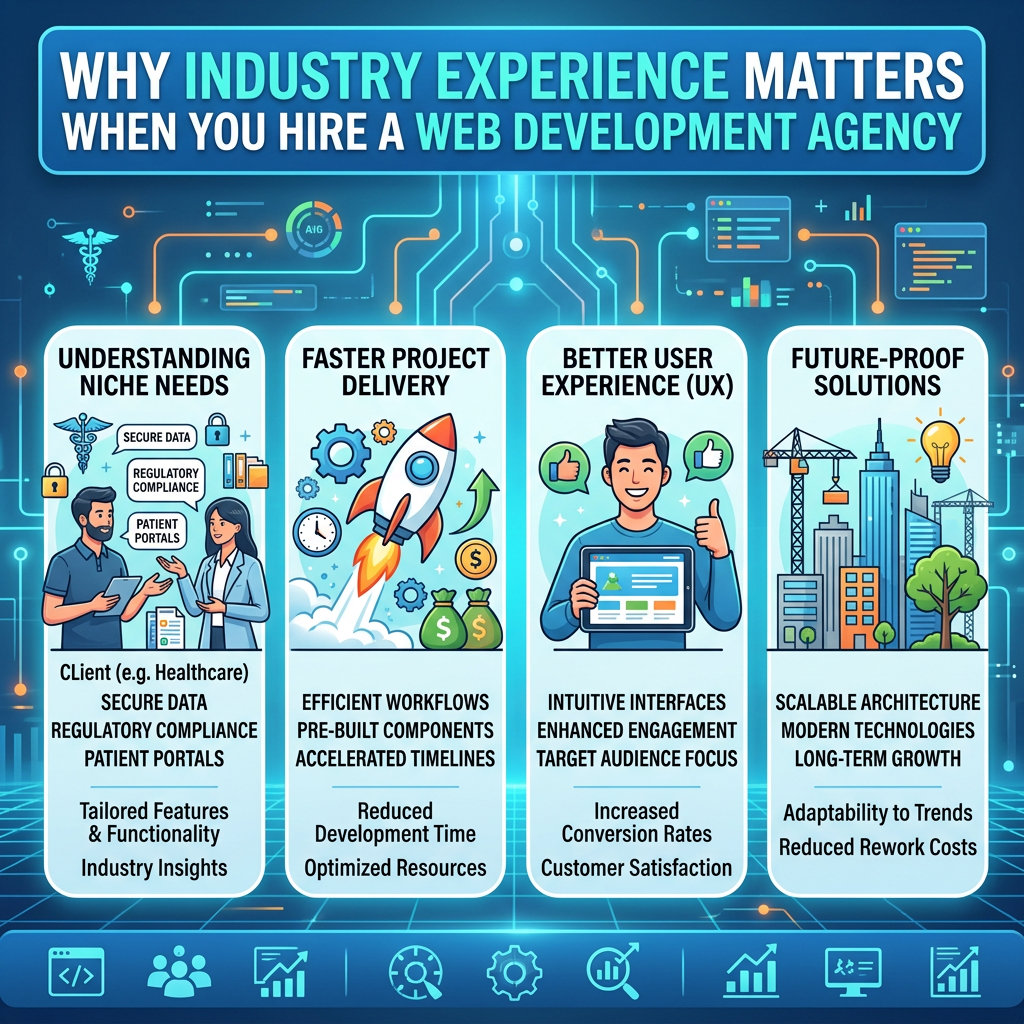
Most agency pitches lead with the platform: WordPress, WooCommerce, a hosting plan, a design process. Those matter, but they are the part of the project every competent agency can speak to. What separates a smooth engagement from a frustrating one is usually something the pitch deck skips: whether the team already understands how your market buys, sells, and gets found.
I have been building websites since 2002, and the clients I work with fall mostly into three groups: industrial, hospitality, and health and beauty. The sites look nothing alike, and the mistakes an inexperienced agency makes on each one are very different.
Industrial Markets: Complexity Is the Content
Industrial buyers are usually engineers, purchasing managers, or technical evaluators. They are not browsing. They arrive with a specification in mind and need to confirm quickly that you can meet it. That shapes everything: how product and capability information is organized, how technical content is written, how a request for quote is captured and routed, and how a long, multi-person buying process is supported.
The industrial work I have done spans areas such as electrical and electronics manufacturing, industrial wire, air pollution systems, power distribution, robotic automation, microfabrication, life science research, and branded food packaging. In those markets, a site that looks polished but buries the specifications or makes the quote request awkward loses the very people it exists to reach. An agency without that background tends to design for a general audience and then wonders why leads are thin.
Hospitality Markets: Speed and Mobile Decide Everything
Restaurant and bar customers are usually on a phone, often already on their way, looking for hours, a menu, a location, or a way to order. Whether the business is a brick-and-mortar restaurant, a virtual restaurant, a sports bar, or a coupon program, the website has to answer those questions in seconds. Menus that only exist as a PDF, ordering flows that are hard to use, and pages that load slowly on a cellular connection all cost real orders.
Hospitality also tends to involve several outside systems at once, such as ordering platforms, email marketing, and promotions, and they all have to work together without breaking the guest experience. That coordination is a skill in itself, and it is much easier when the agency has done it before.
Health and Beauty Markets: Brand and Trust Carry the Sale
In skincare, sun care, and salon and spa services, the website is part of the brand. Product categorization has to help a shopper find the right item for their concern, whether that is hydration, sensitivity, or aging. Imagery and tone need to feel consistent with the product. For service businesses like nail, microblading, and massage salons, the priorities shift to online booking, clear service menus, and local search visibility.
I spent time on the in-house side of this market as an internet marketing manager, which changed how I approach these projects. Knowing how a marketing team actually uses a site day to day makes me ask better questions up front.
What to Ask an Agency Before You Sign
- Which clients in our industry have you worked with, and can we see the sites? Related experience beats a long general portfolio.
- How does your team learn the way our customers buy? Listen for specific habits of your buyers, not generic best practices.
- What do you already know about the systems our industry relies on? Ordering platforms, quoting tools, booking software, and compliance requirements all shape the build.
- What mistakes do you see agencies make in our market? An experienced team can name them quickly. A generalist will struggle.
- Can we speak with a client in a similar business? Their account of how the agency handled industry-specific problems is worth more than any case study.
What About an Agency Without Your Industry on Its List?
It is not an automatic disqualifier. A strong agency can learn a new market, and fresh eyes sometimes help. The difference is who pays for the learning. If the agency is new to your industry, ask how they plan to get up to speed before design starts, and make sure discovery is long enough to cover it. The worst outcome is a team that assumes your market works like every other one.
Where to Start
Before your next agency conversation, write down three things your customers do that an outsider would not guess. Then see whether the agency raises any of them on its own. If you want to see the kinds of businesses I work with, my client portfolio is a good place to start, and the market expertise page has more detail on each sector.