
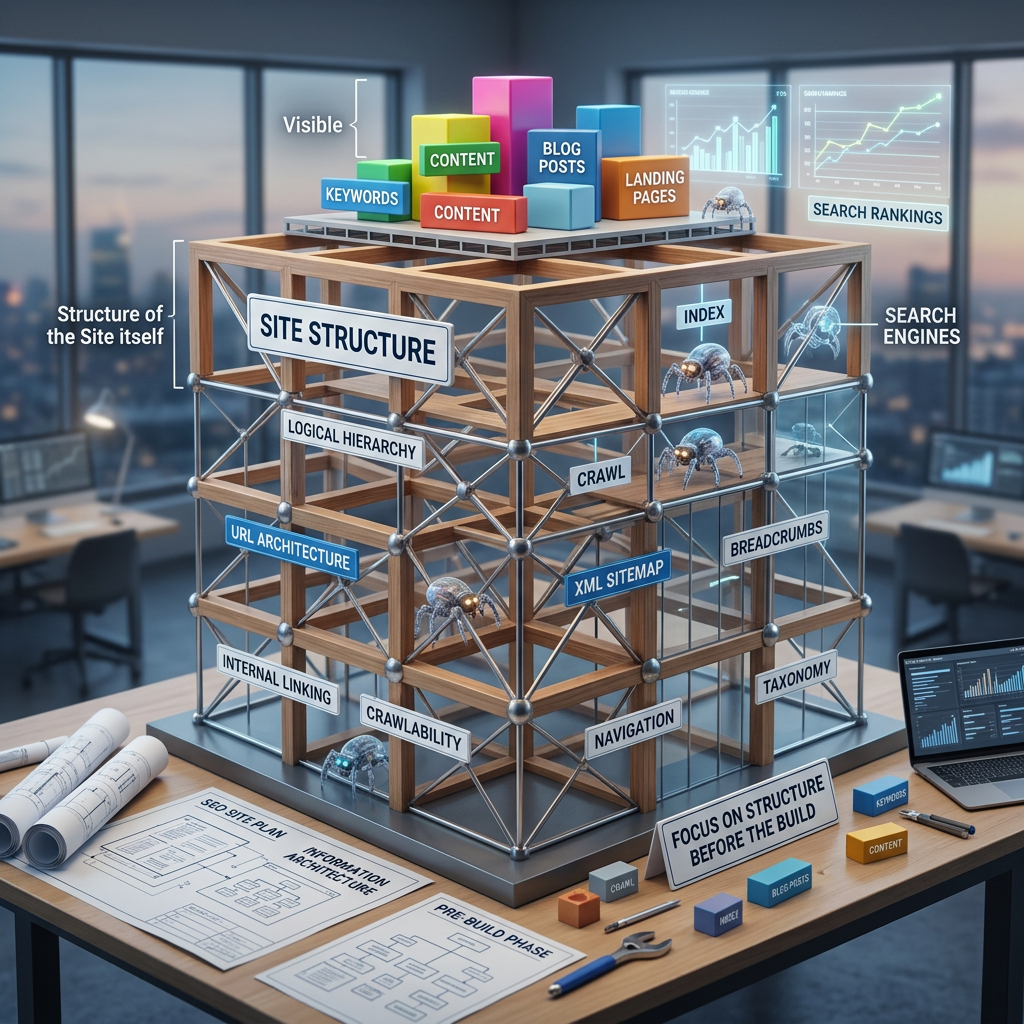
Most SEO conversations start with keywords and content. Those matter, but they sit on top of something less visible: the structure of the site itself. If search engines cannot easily crawl, index, and understand your pages, the best content in your industry will not rank the way it should. Structure is also the hardest part to change later, which is why it deserves attention before the build starts.
Why Architecture Gets Overlooked
A new site looks fine whether or not its structure is sound. Menus work, pages load, the design is approved. The problems show up months later, when new sections get added without a plan, similar pages compete against each other, and important pages end up buried several clicks deep. By then, fixing it means moving URLs, setting up redirects, and rebuilding navigation on a live site with real rankings at stake.
The Four Areas I Look At
- Site architecture: how pages are grouped, how deep they sit, and how they link to each other. A clear hierarchy helps visitors find what they need and helps search engines understand which pages matter most.
- Page experience: speed, mobile behavior, and visual stability. A well-organized site that loads slowly or shifts around on a phone still loses ground.
- Image optimization: properly sized and described images keep pages fast and give search engines more context about the content.
- Credibility and authority: the signals that show a site is trustworthy, including clear business information, accurate content, and quality links from other sites.
These work together. Strong architecture makes the other three easier, and weak architecture undermines them.
What to Ask an Agency Before You Sign
- When does SEO planning start? The right answer is during discovery, before design. If SEO is a final step before launch, the structure has already been decided without it.
- How will you map our pages and URLs? Ask to see a site map or page hierarchy early, and how it reflects the way customers search, not just how the company is organized internally.
- How do you prevent pages from competing with each other? Overlapping pages targeting the same topic split attention and weaken both.
- How will internal links be handled? Ask who is responsible for linking new content into the existing structure over time.
- What happens to the structure as we grow? A site that works at 30 pages should have a plan for 300.
- How do you protect rankings if the structure changes? Redirects, updated sitemaps, and search console monitoring should be part of any restructuring plan.
What Good Looks Like
Every important page is reachable in a few clicks. Related content is grouped logically. URLs are clean and readable. New pages have a clear home in the structure instead of being added wherever there is room. And someone owns the structure after launch, so it does not drift as the business adds products, services, and locations.
Where to Start
Ask any agency you are considering to walk you through the page structure they would propose for your site and explain why. If the answer is mostly about design and not about how people and search engines will move through it, keep asking. You can see how I approach this on my custom WordPress development page.