
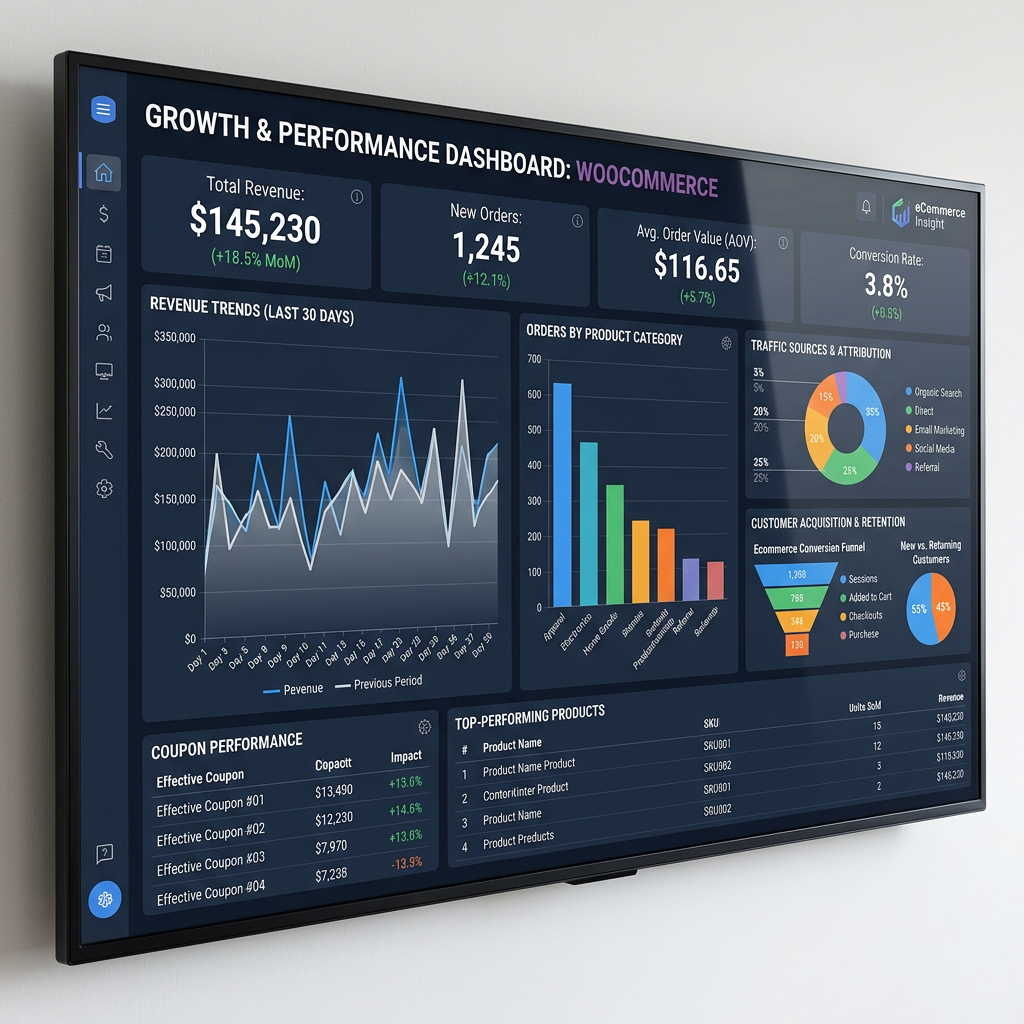
If you run a WooCommerce store, you’re already using MarTech — you probably just don’t call it that. The email platform you use to follow up with customers, the analytics tool tracking where your traffic comes from, the automation that sends order confirmations — all of it is MarTech. Marketing Technology.
The question isn’t whether to use MarTech. It’s whether the tools you’re using are connected properly, set up to do what they’re capable of, and actually giving you a return. For most WooCommerce stores, the honest answer is: not quite.
What MarTech Actually Means
MarTech is the category of software that sits at the intersection of marketing and technology — tools that help you attract, convert, retain, and understand customers through automated, data-driven processes. For a WooCommerce store, that typically includes email and SMS marketing platforms (Klaviyo), analytics and tracking tools (Google Analytics 4, Google Tag Manager), automation platforms (Zapier), SEO implementations, and CRM integrations.
Each of these does something useful on its own. The real power comes when they work together — when your email platform knows what a customer browsed but didn’t buy, your analytics can attribute a sale to the specific email that triggered it, and your CRM reflects the full picture of that customer relationship without anyone manually copying data between systems.
Why WooCommerce Stores Specifically Need It
WooCommerce gives you a powerful, flexible e-commerce platform. What it doesn’t give you out of the box is the intelligence layer that turns a transaction engine into a revenue growth system. A properly integrated MarTech stack knows when a customer abandons a cart and automatically sends a recovery sequence, segments customers by purchase history and lifetime value, tracks exactly which marketing activity drove each sale, and syncs order data to your CRM automatically — eliminating manual data entry that wastes hours and introduces errors.
The Core MarTech Stack for a WooCommerce Store
Klaviyo — Email and SMS Automation
Klaviyo is the email and SMS platform built specifically for e-commerce. It connects directly to WooCommerce and understands your store’s data natively — products browsed, carts abandoned, orders placed, revenue generated per customer. That data powers behavioral automations that trigger based on what customers actually do, not just the list segment they happen to be in.
Google Tag Manager and GA4 — Tracking and Analytics
You can’t optimize what you can’t measure. GTM lets you deploy and manage tracking scripts across your site without touching code for every change. Combined with GA4’s enhanced e-commerce event tracking, you get a clear picture of how customers move through your store — which products get viewed but not purchased, where checkout drop-off happens, which traffic sources actually convert.
SEO — The Foundation Everything Else Builds On
MarTech tools drive more value when there’s more traffic to work with. SEO — proper site architecture, product schema markup, optimized metadata, fast page loads — is what builds the organic traffic base that your email, automation, and analytics tools then leverage.
The Integration Problem
Most stores have some of these tools already. The problem is usually that they’re not properly connected, not correctly configured, or not being used anywhere near their potential. Klaviyo installed but only sending a welcome email. GA4 tracking page views but not e-commerce events. A MarTech stack that’s partially implemented is significantly less valuable than one that’s fully integrated and working together.
At Interactive Design Group, MarTech integration is a core part of what we do alongside WooCommerce development. We set up Klaviyo behavioral flows, deploy GTM and GA4 e-commerce tracking, and implement the SEO foundations that drive organic traffic to everything else. If your store is running on tools that aren’t fully connected, get in touch — we’ll show you what a properly integrated MarTech stack would actually do for your revenue.