
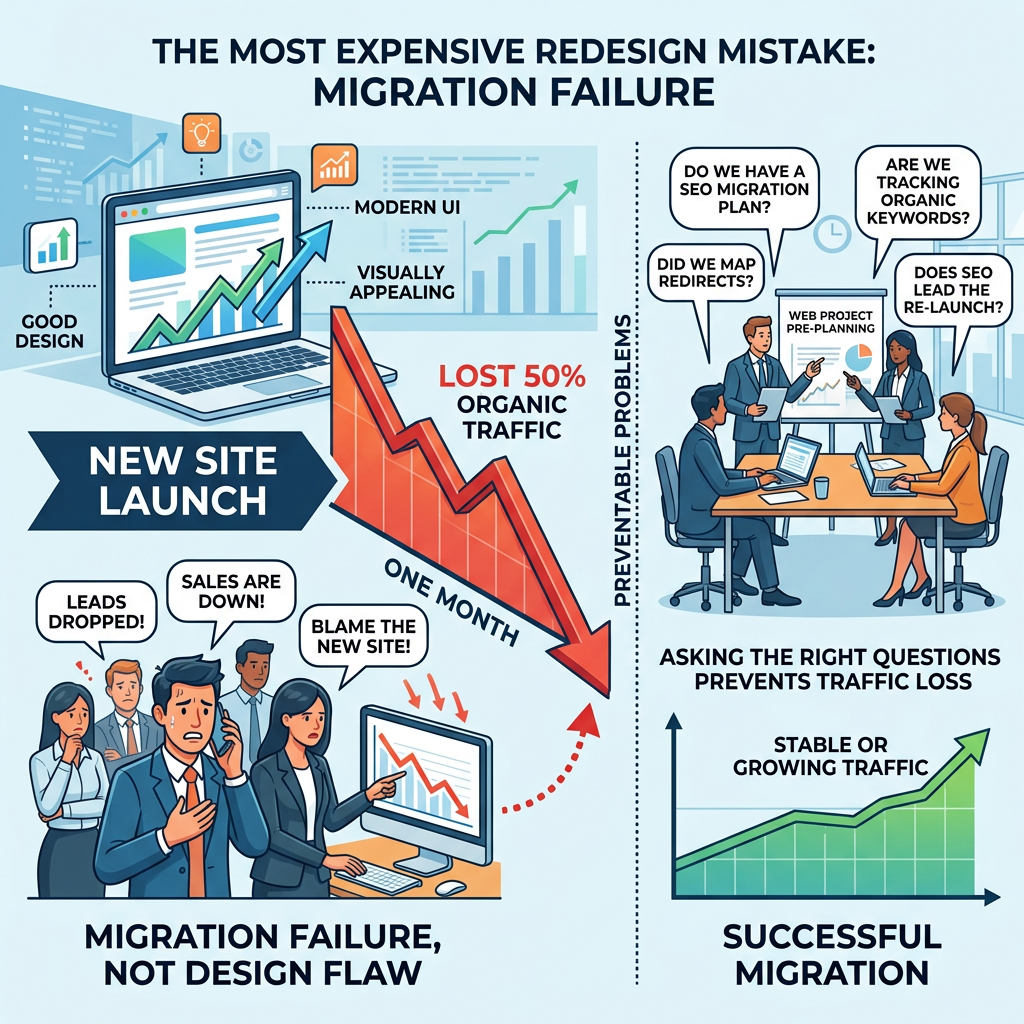
The most expensive redesign mistake I see is not a bad design. It is a good-looking site that launches and loses half its organic traffic within a month. Leads drop, the sales team notices, and the new site gets blamed for something that was really a migration failure. It is also one of the most preventable problems in web projects, if you ask the right questions before work begins.
Why Redesigns Put Rankings at Risk
Search engines rank individual URLs. When a redesign changes page addresses, restructures navigation, rewrites content, or swaps platforms, every one of those pages has to be accounted for. A page that disappears without a redirect, or a title and heading that change with no plan, can drop out of results overnight. Years of earned authority can go with it, and recovery takes months.
What Should Happen Before Design Starts
- A full inventory of current pages: every URL, with traffic, rankings, and conversions attached, so the team knows which pages earn their keep.
- A decision for each page: keep, improve, merge, or retire. Retired pages still need a destination for their visitors and their links.
- A baseline: organic traffic, leads, and top keyword positions recorded before launch, so success and damage can both be measured.
- A clear URL plan: keep addresses unchanged wherever possible. Every change should be deliberate and documented.
What Should Happen at Launch
- Redirect mapping: a one-to-one 301 redirect for every old URL that changes, tested before the site goes live.
- Metadata carried over: titles, descriptions, headings, image alt text, and structured data should move with the content instead of being rewritten by default.
- Staging review: the new site is checked on a private copy, with search indexing blocked until it is ready and then deliberately switched on.
- Analytics and tracking verified: tags, conversion events, and form tracking confirmed working on day one, not discovered missing a month later.
- Accessibility and performance checks: both affect how the site performs and are far cheaper to address before launch than after.
What Should Happen After Launch
The first weeks matter as much as the launch itself. Someone should be watching crawl errors, broken links, and ranking movement, and fixing problems quickly. Ask who is responsible for that monitoring and for how long. A short dip right after launch can be normal. A steady decline that nobody is looking at is not.
Questions to Ask Before You Sign
- How will you protect our current rankings during the migration? A specific process is a good sign. A vague reassurance is not.
- Who owns the redirect map, and is it part of the fixed scope? If it is billed as an add-on, find out the cost now.
- What traffic and lead numbers will we track, and for how long after launch?
- What happens if traffic drops after launch? Ask whether fixing it is covered or billed separately.
- Are you changing platforms, and what moves with the content? Products, users, orders, and forms all need a migration plan of their own.
Treat Migration as Part of the Project, Not an Afterthought
A redesign should add to what your site already earns, not reset it. The agencies worth hiring treat traffic protection as a core deliverable, with its own line in the scope and its own owner on the team. If a proposal treats it as a launch-day checklist item, keep asking until you understand the plan.
Where to Start
Before approving a redesign, pull a current report of your top landing pages and the leads they generate. That is what you need to protect. You can see how I approach these projects on my custom WordPress development page, and my managed hosting and maintenance plans cover the monitoring and support that keep a new site performing after launch.