
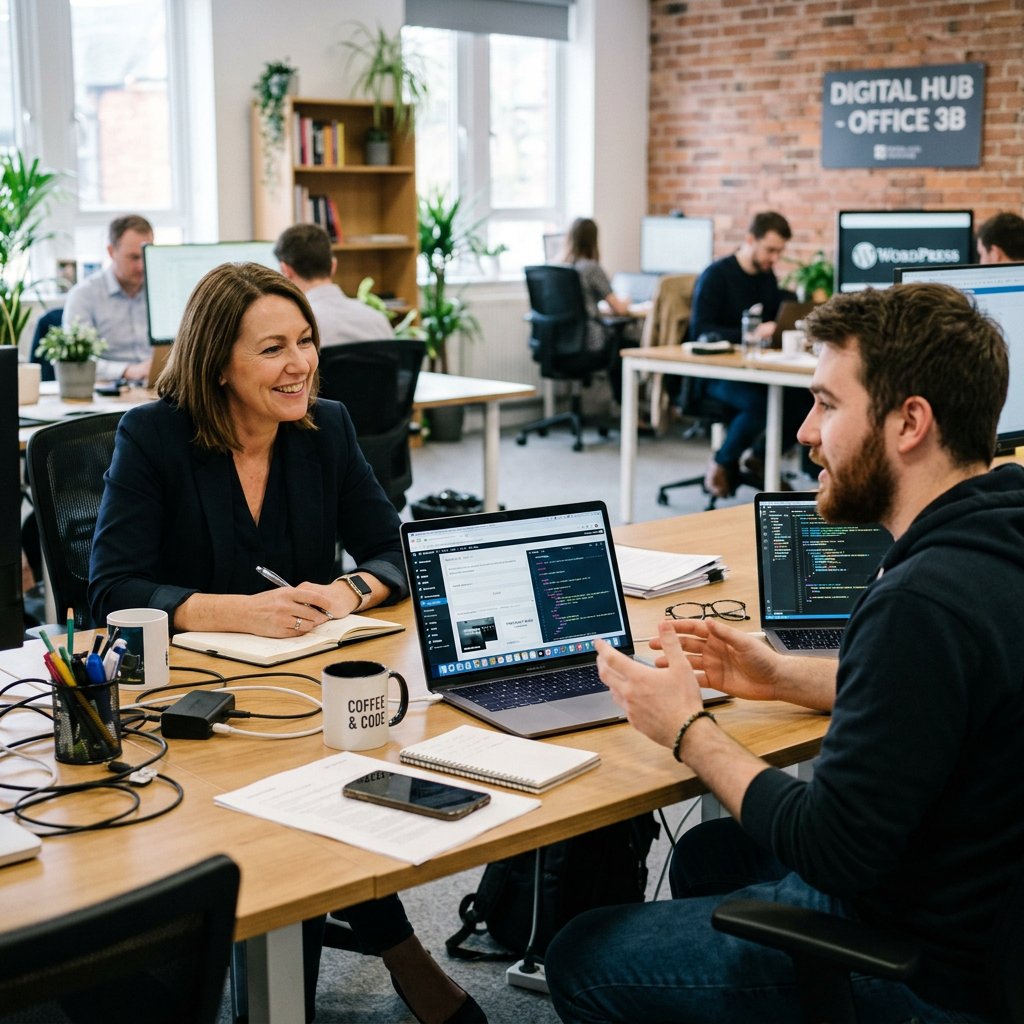
Hiring a WordPress developer is one of those decisions that looks straightforward until you’re in the middle of it. There are thousands of people who call themselves WordPress developers, the price range is enormous, and it’s genuinely hard to evaluate quality before you’ve seen someone’s work firsthand. Here’s how to cut through the noise.
Start With What You Actually Need
“WordPress developer” covers a wide range of skills. Someone who specializes in custom theme development has a different skill set than someone who primarily builds WooCommerce stores, and both are different from a developer who focuses on performance optimization or plugin development. Before you start looking, get clear on what your project actually requires — that narrows the field considerably and helps you ask the right questions.
Questions Worth Asking Before You Hire
Can I see examples of similar projects?
A portfolio of live sites tells you a lot more than a list of services. Look for projects that are similar to yours in complexity and type. A developer who has built ten brochure sites isn’t necessarily equipped to build a complex WooCommerce store with custom integrations, and vice versa. Ask specifically for examples closest to what you need — not just their best-looking work.
Who will actually do the work?
This matters more than it might seem. Some agencies quote the work but outsource the actual development without disclosing this. The person you meet in a sales conversation may have nothing to do with the person building your site. Ask directly: who on your team will be working on this project, and can I communicate with them directly?
What does your development process look like?
A developer with a real process can describe it. They should be able to tell you how they handle discovery, design approvals, development, testing, and launch. If the answer is vague — “we build it and show you” — that’s a sign there isn’t much structure behind the curtain, which usually means scope creep, missed expectations, and timeline problems.
How do you handle revisions and scope changes?
Every project evolves. What matters is how changes are handled when they happen. Is there a formal change order process? How are additional hours billed? A developer who has a clear answer has been through this enough times to have a system. A developer who says “we’ll figure it out” is setting the stage for a difficult conversation later.
Will I own the site completely when we’re done?
This should be non-negotiable. You should own your domain, your hosting account, your WordPress installation, all theme and plugin licenses you’ve paid for, and every file on the server. Some developers retain ownership of custom code or hold hosting accounts in their own name — which creates leverage they can use if the relationship goes sideways. Get the answer in writing.
What does post-launch support look like?
The work doesn’t end at launch. Plugins need updating, things occasionally break, and you’ll want changes over time. Ask whether they offer a maintenance plan, what it includes, and what the response time looks like if something goes wrong. A developer with no post-launch answer is one who may be difficult to reach after the invoice is paid.
Red Flags to Watch For
- No contract or vague contract. A proper contract specifies scope, deliverables, timeline, payment terms, and ownership. If someone wants to work on a handshake, walk away.
- Unusually low quotes. There’s a floor to what quality WordPress development costs. Quotes significantly below market rate almost always mean something is being cut.
- Slow or unclear communication before you’ve even hired them. How a developer communicates during the sales process is a reliable preview of how they’ll communicate during the project.
- No questions about your business. A developer who quotes without understanding your goals is building something generic.
- Pressure to decide quickly. Legitimate developers don’t need to manufacture urgency.
Freelancer vs. Agency: How to Think About It
Both can produce excellent work. Freelancers are typically more affordable with direct access to the person doing the work, but capacity is limited. Agencies have more resources and structured processes — but cost more. For smaller, well-defined projects, a skilled freelancer is often the better value. For larger or more complex projects where ongoing support matters, a small agency with a track record is usually the safer bet.
The Cheapest Option Rarely Stays Cheap
A poorly built WordPress site costs more over time than a well-built one — in developer hours fixing problems, in lost traffic from poor SEO foundations, in conversions lost to slow load times, and eventually in the cost of rebuilding it properly. The right question isn’t “who’s cheapest?” It’s “who will build something that works and that I can rely on for the next several years?”
At Interactive Design Group, we’ve been building custom WordPress and WooCommerce sites since 2002. We have a clear process, transparent contracts, and we’re happy to answer every question on this list — in writing. If you’re evaluating developers for an upcoming project, get in touch and let’s have an honest conversation about whether we’re the right fit.