
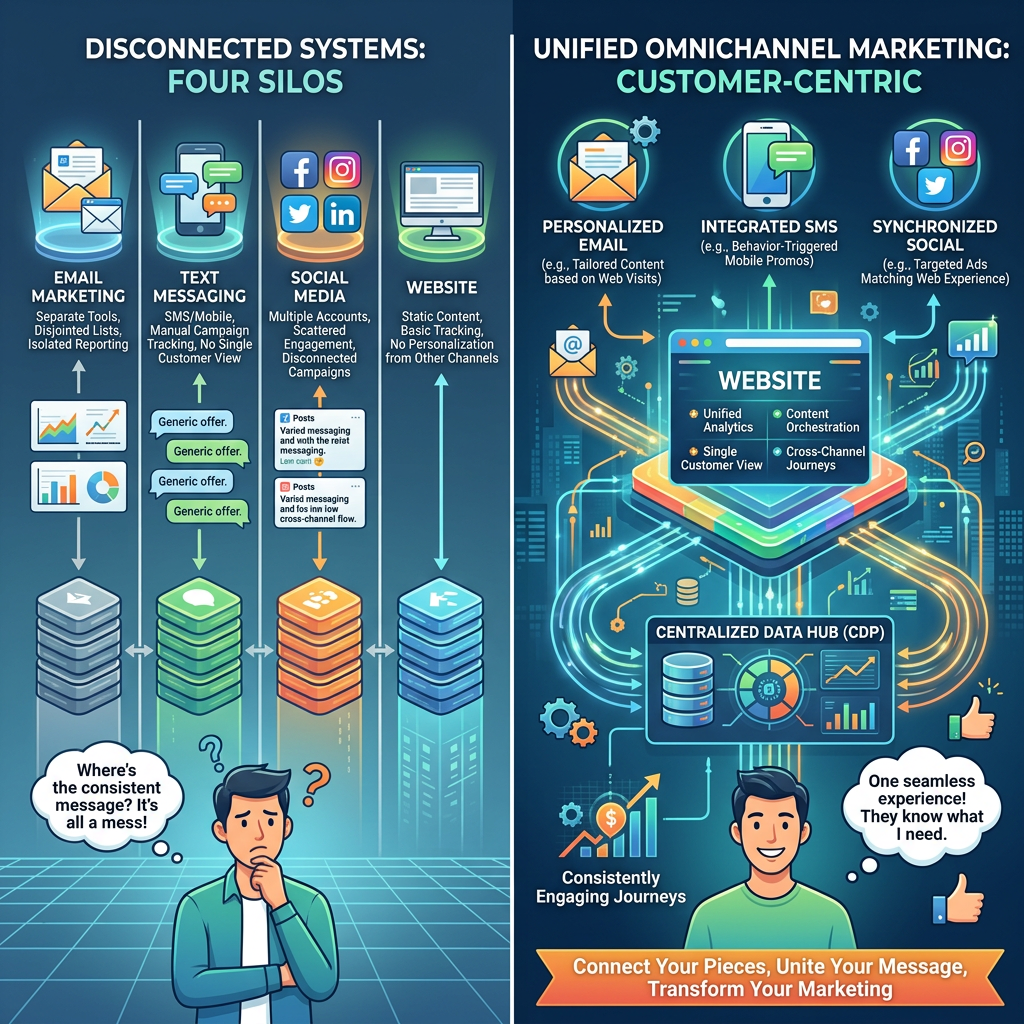
Most marketing teams do not have a shortage of channels. They have email, text messaging, social, and a website, and each one usually runs in its own tool with its own list and its own reporting. The customer sees one brand. The team sees four disconnected systems. Omnichannel marketing is the work of connecting those pieces so a customer’s experience stays consistent no matter how they first came in, and the website is the natural center of it.
Where Disconnected Channels Cost You
The problems are easy to recognize once you know where to look. A customer buys something and keeps getting promotional emails for it. Someone unsubscribes from email and still gets texts. A lead fills out a form, and sales and marketing each hold a different version of that person’s information. Each issue is small, but together they make a business look disorganized and make results harder to measure.
What a Connected Setup Includes
- One customer record: form submissions, orders, and signups all feed the same place, so every channel works from the same information.
- Email automation: welcome series, abandoned cart reminders, and follow-ups triggered by what the customer actually did on the site.
- SMS: text messaging with clear consent handling, coordinated with email so customers are not hit with the same message twice.
- Social channel messaging: inquiries and campaigns on social platforms tied back to the same customer data where possible.
- Shared reporting: a way to see which channel started a relationship and which one closed it.
The platforms behind this vary. I work with tools such as HubSpot, Mailchimp, Constant Contact, and Klaviyo, connected to WordPress through their APIs. The right choice depends on your team, your data, and what you already pay for. It should never be whatever an agency happens to prefer.
What to Ask an Agency Before You Sign
- Which of our current tools will you keep, and why? A good agency starts from what you have and justifies every replacement.
- How does customer data move between the site and each channel? Ask for specifics on which fields sync, in which direction, and how often.
- How do you handle consent and unsubscribes across channels? This is both a customer trust issue and a compliance one, especially for SMS.
- What happens when an integration fails? Silent failures mean lost leads. Ask how they are caught and who is alerted.
- How will we know which channel is working? Reporting should connect a campaign to an actual order or lead, not just a click.
- Who maintains the connections after launch? Platforms change their APIs. Someone has to own that over time.
Start With the Customer, Not the Tool
The most common mistake is buying or connecting tools before deciding what the customer journey should look like. Map it first: how someone finds you, what they should hear after they sign up, what happens after a purchase, and what should stop them from getting a message. Then choose the tools that make that journey work.
Where to Start
List every channel your team uses today and where each one keeps its customer data. The number of separate lists usually tells you how much work there is to do. If you want to see how I approach CRM and omnichannel work, it is covered on my custom WordPress development page.