
“Can the site handle it” is one of those questions that sounds simple until you try to get a real answer. Operations managers and marketing directors ask me this constantly — usually right after a traffic spike caught someone off guard, or right before a launch that’s expected to bring one. The honest answer is that scalability isn’t really a WordPress question. It’s a hosting and architecture question, and it’s one most agencies don’t get specific about until something breaks.
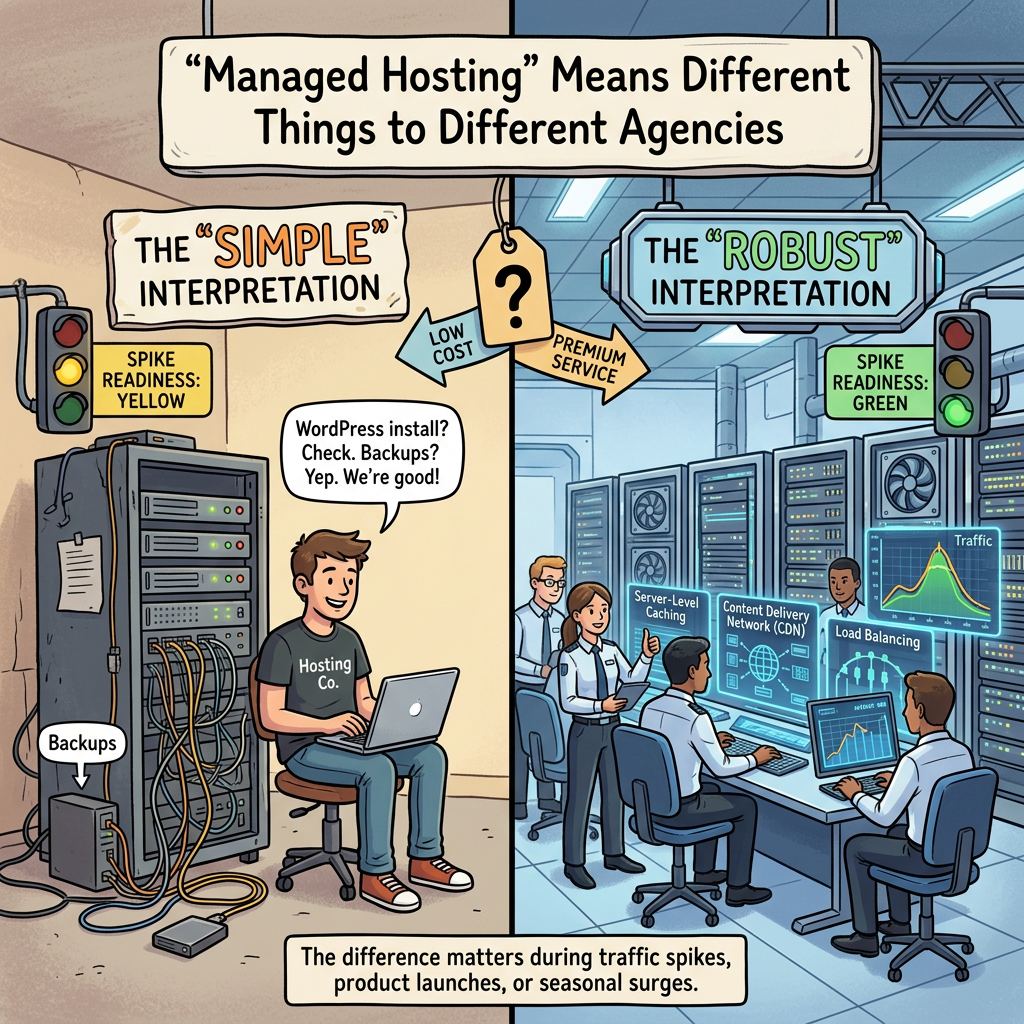
“Managed Hosting” Means Different Things to Different Agencies
The term gets used loosely. To some agencies, managed hosting means someone installed WordPress on a server and set up automatic backups. To others, it means a purpose-built environment with server-level caching, a content delivery network, load balancing, and a team actively watching performance. Those are wildly different levels of readiness for a traffic spike, a product launch, or a seasonal surge, and the price difference between them usually reflects that gap.
What to Ask an Agency Before You Sign
- What’s the actual hosting infrastructure? Ask whether it’s shared hosting, a VPS, or a dedicated managed WordPress platform, and who the underlying provider is. “We manage it” isn’t a complete answer.
- Has this setup been load tested? Ask for real numbers — concurrent users, requests per second — not a general assurance that it “scales.” If they haven’t tested it, that’s useful information too.
- What caching is in place, and where? Page caching, object caching, and a CDN each solve different bottlenecks. Ask specifically what’s configured and what it’s tuned for.
- How does the environment handle a traffic spike in practice? Auto-scaling, manual intervention, and a fixed-capacity server all behave very differently under sudden load. Get a straight answer about which one you’re getting.
- What’s the plan for database performance as content and traffic grow? A site that’s fast at launch can slow down significantly as the database grows, particularly with WooCommerce or membership functionality. Ask how that’s monitored and addressed over time.
- What happens during a launch or campaign push? Ask whether the agency proactively scales resources ahead of a known traffic event, or whether that’s on you to request — and how much notice they need.
- What’s the actual uptime track record, with data? A specific number backed by monitoring history is worth more than a percentage in a sales deck.
Why This Matters More Than It Seems To
A site that goes down or slows to a crawl during a product launch, a press mention, or a seasonal campaign isn’t just an inconvenience — it’s lost revenue and a visible failure at the exact moment the business needed the site to perform. This is one of the few areas where underinvesting doesn’t show up until the worst possible time, which is exactly why it deserves specific answers instead of general reassurance during the vetting process.
What I’d Tell a Colleague Making This Call
Ask for a reference client whose traffic profile resembles what you’re expecting — similar scale, similar spikes — and ask that client directly how the site performed under real pressure. Sales materials describe intent. A comparable client’s experience describes what actually happens.